
Al Maaref University - AI Agents Workshop
AI Agents: Six Building Blocks of Autonomous Systems
Al Maaref University, Beirut, Lebanon2026
A 90-minute, no-code workshop at Al Maaref University for biomedical, computer, and mechanical engineering students on moving from asking AI questions to giving it jobs. We designed an AI team live around Project Pulse, a low-cost wearable that tracks an elderly patient's heart rate at home and alerts their family.
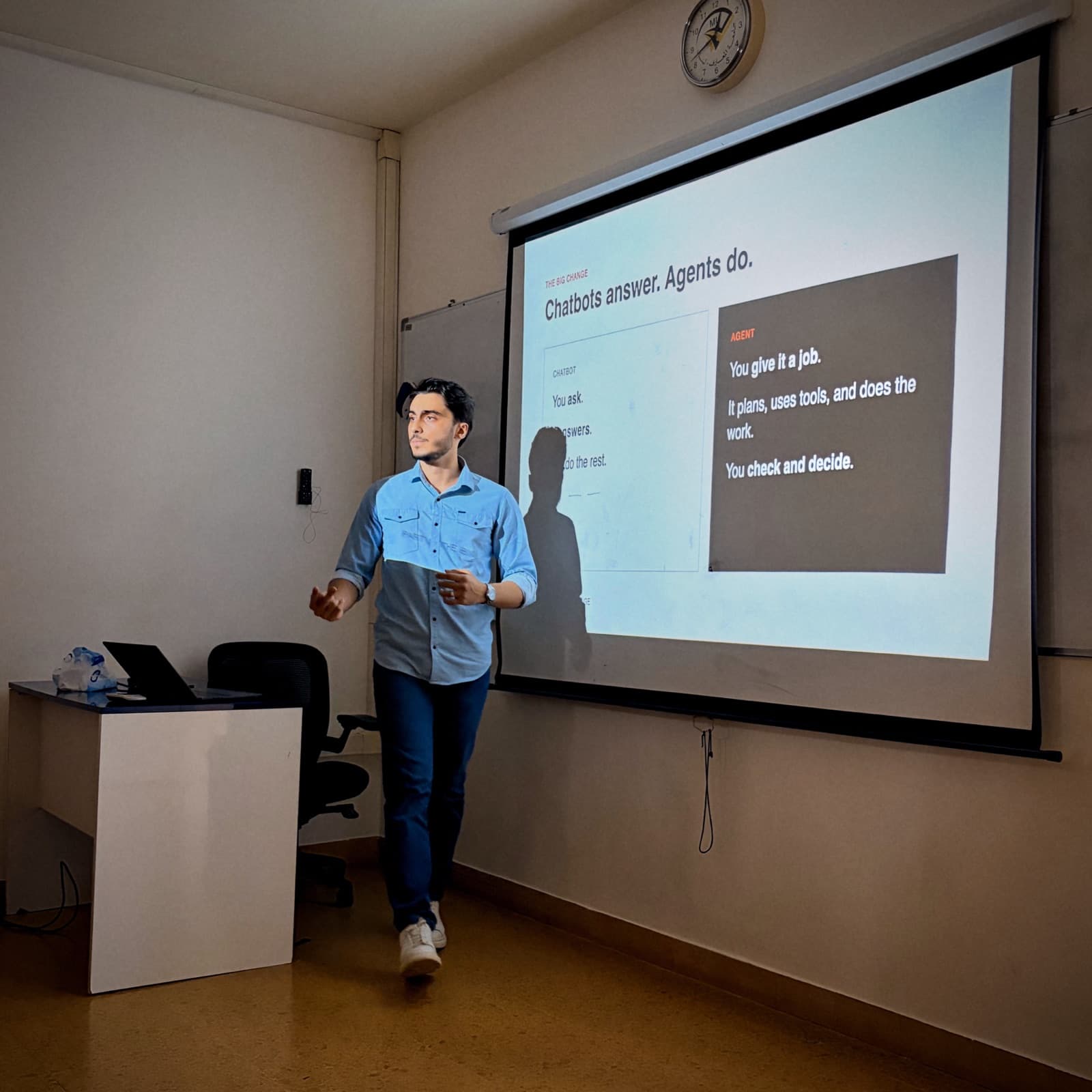
- Chatbots answer. Agents plan, use tools, and do the work while you check and decide.
- Every autonomous system is built from six blocks, from the system prompt to workflows.
- A team of specialist agents with a checker beats one genius agent.
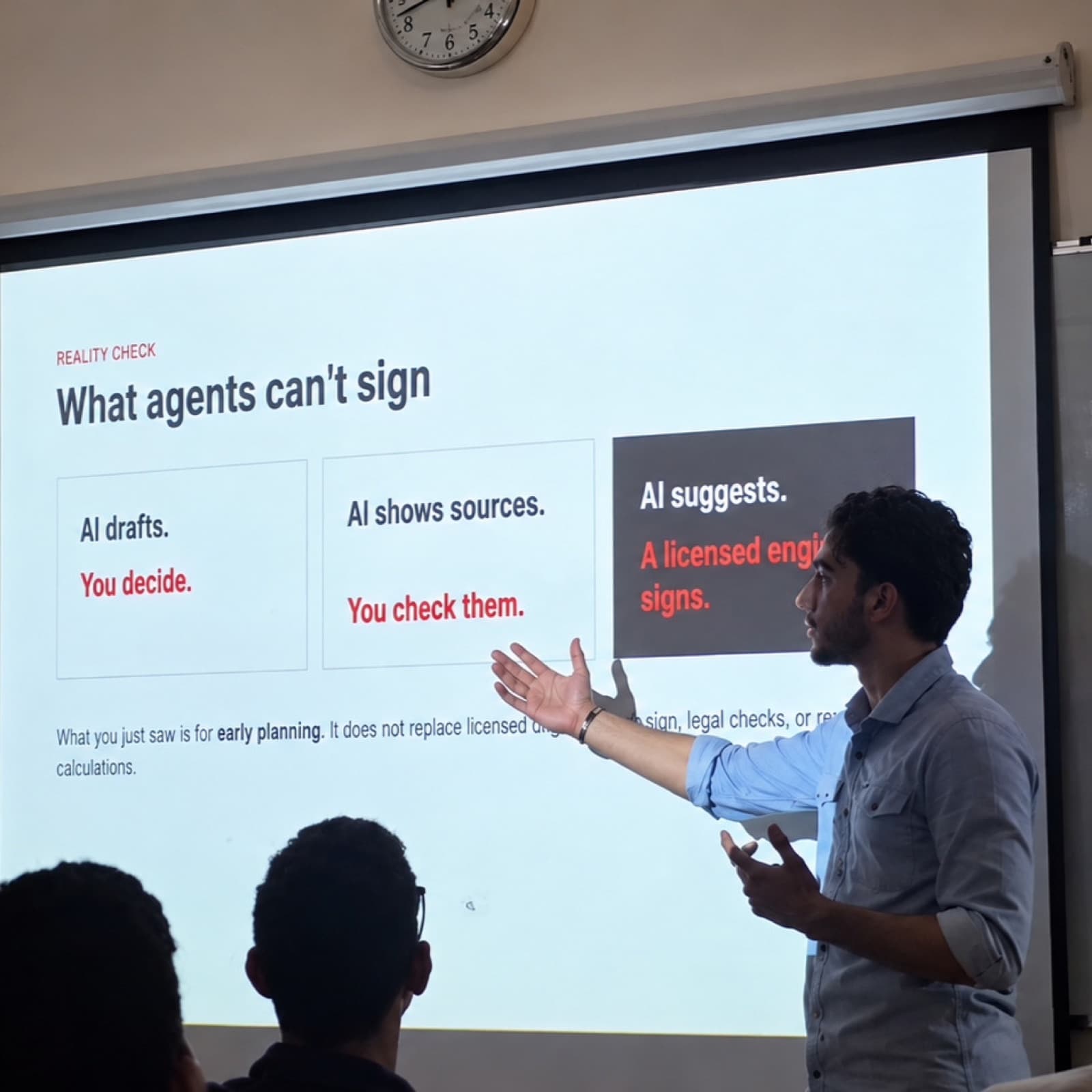
- AI drafts and shows sources. You verify them, and a licensed engineer signs.
Chatbots answer, agents do
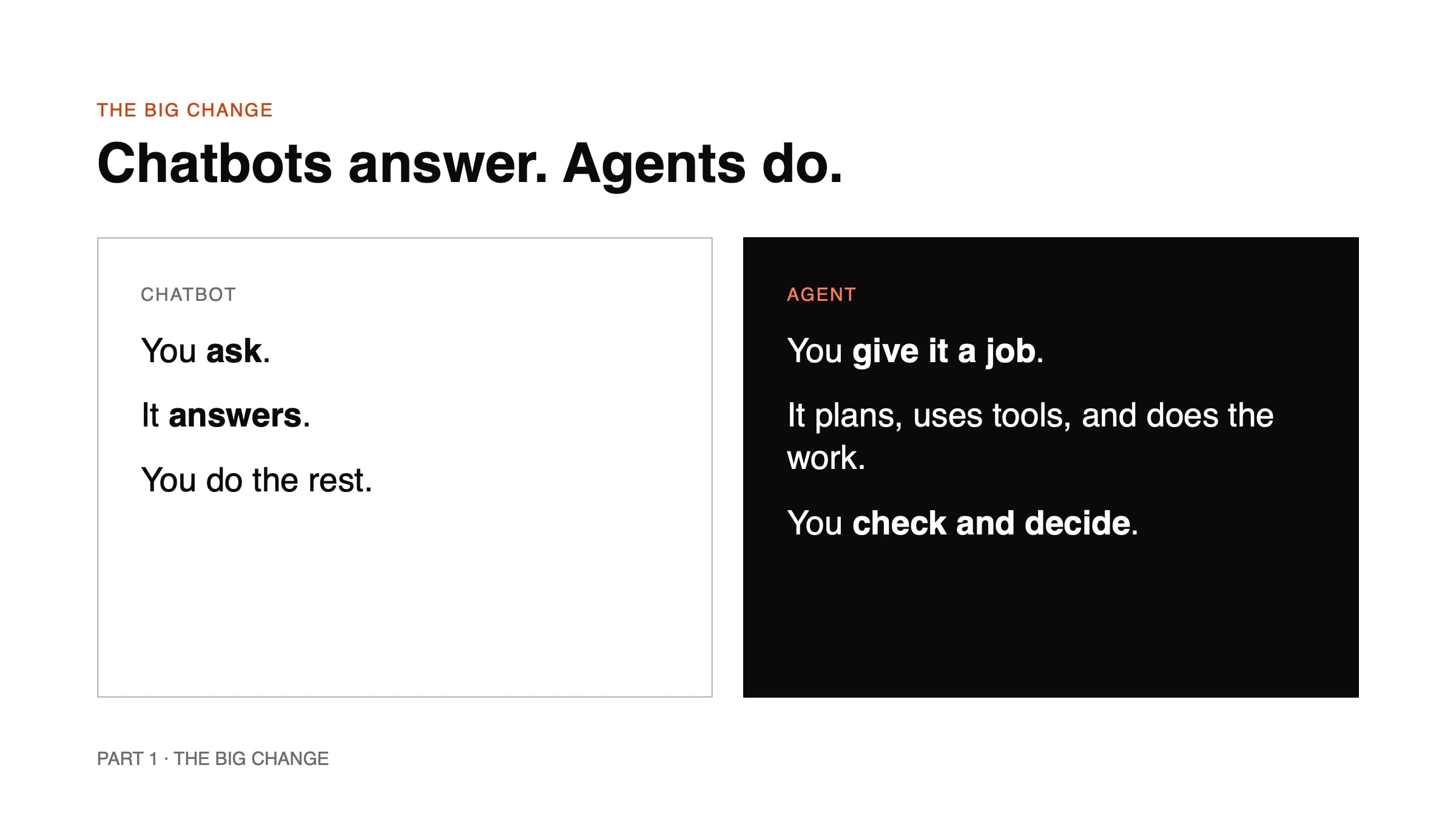
With a chatbot, you ask, it answers, and you do the rest. With an agent, you give it a job: it works in a loop of think, act, observe, decide, using tools until the goal is met or a human says stop, and you check the result. I opened by saying most of us drive a Formula 1 car to the supermarket, then laid out the three levels we would climb in the room: a helper, an agent, and a workflow.
Six building blocks
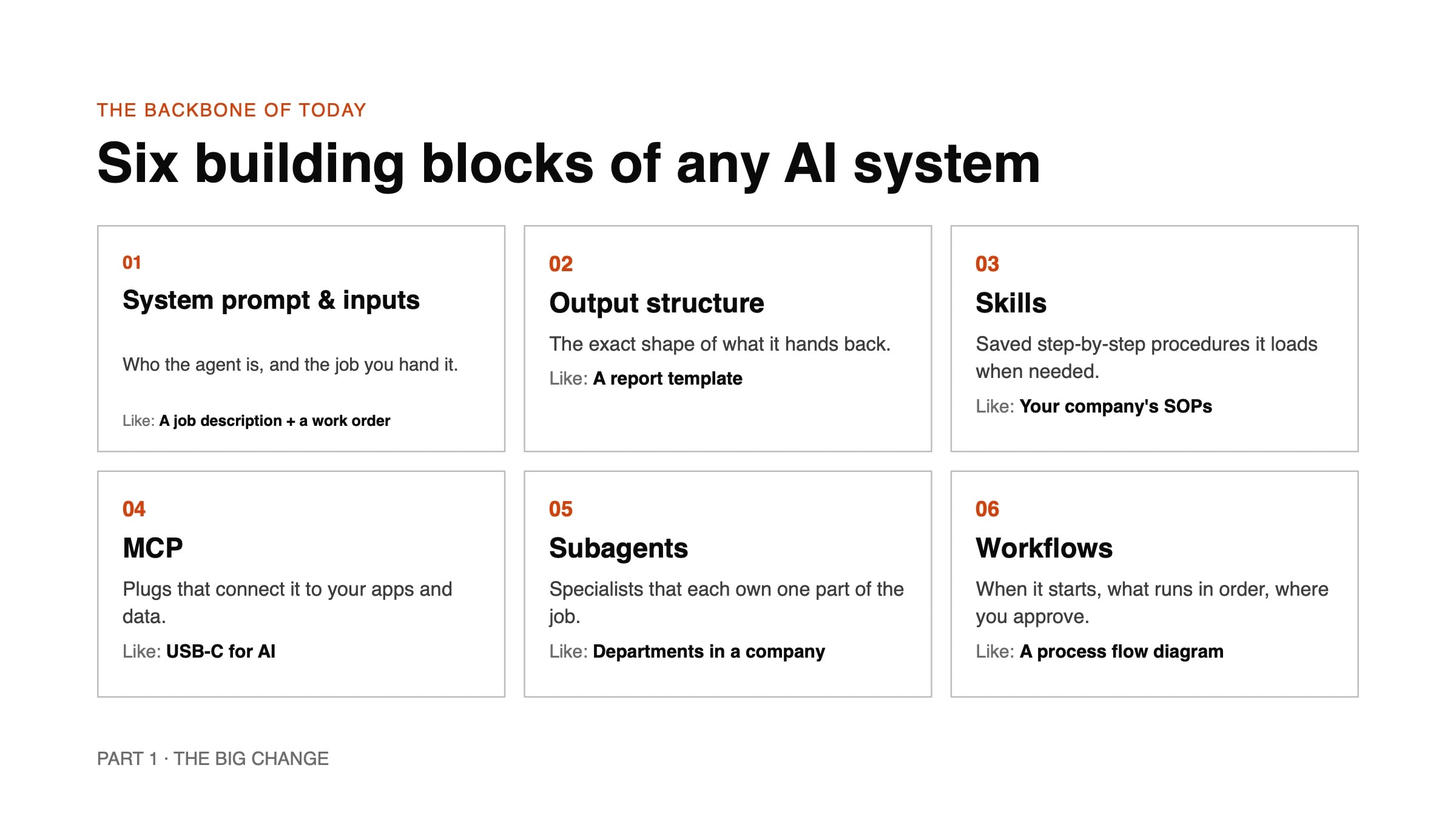
Each part of the workshop added one block, mapped to something engineers already know: the system prompt and inputs (a job description and a work order), the output structure (a report template), skills (company SOPs), MCP (USB-C for AI), subagents (departments), and workflows (a process flow diagram). A good system prompt covers role, goal, steps, context, tools, rules, and output, because the AI is a genius intern who knows nothing about you. Skills are procedures it loads only when a task needs them, and MCP is the one plug that connects it to Drive, Sheets, email, and lab databases, so it can act instead of being a brain in a jar.
A team of agents
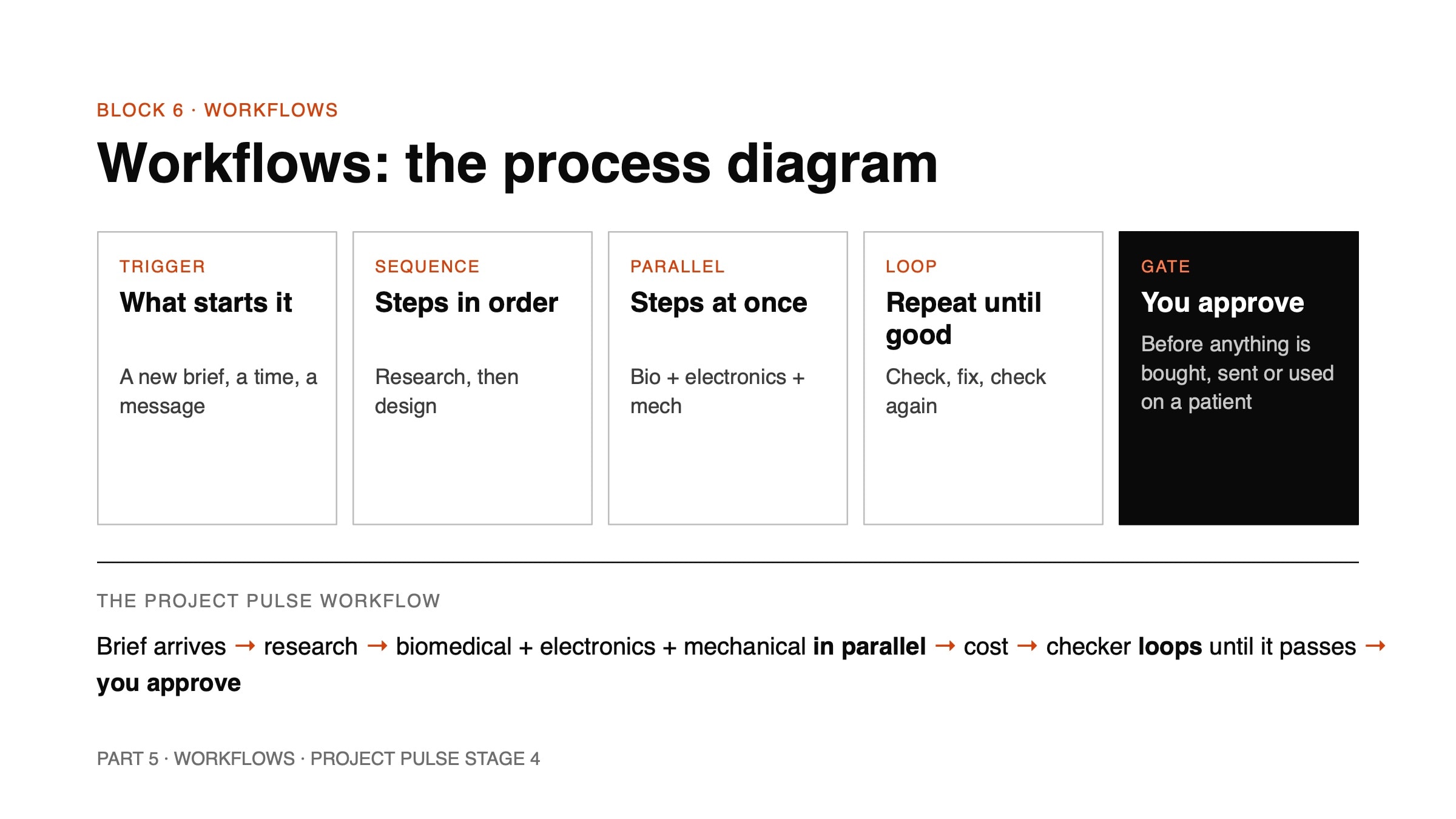
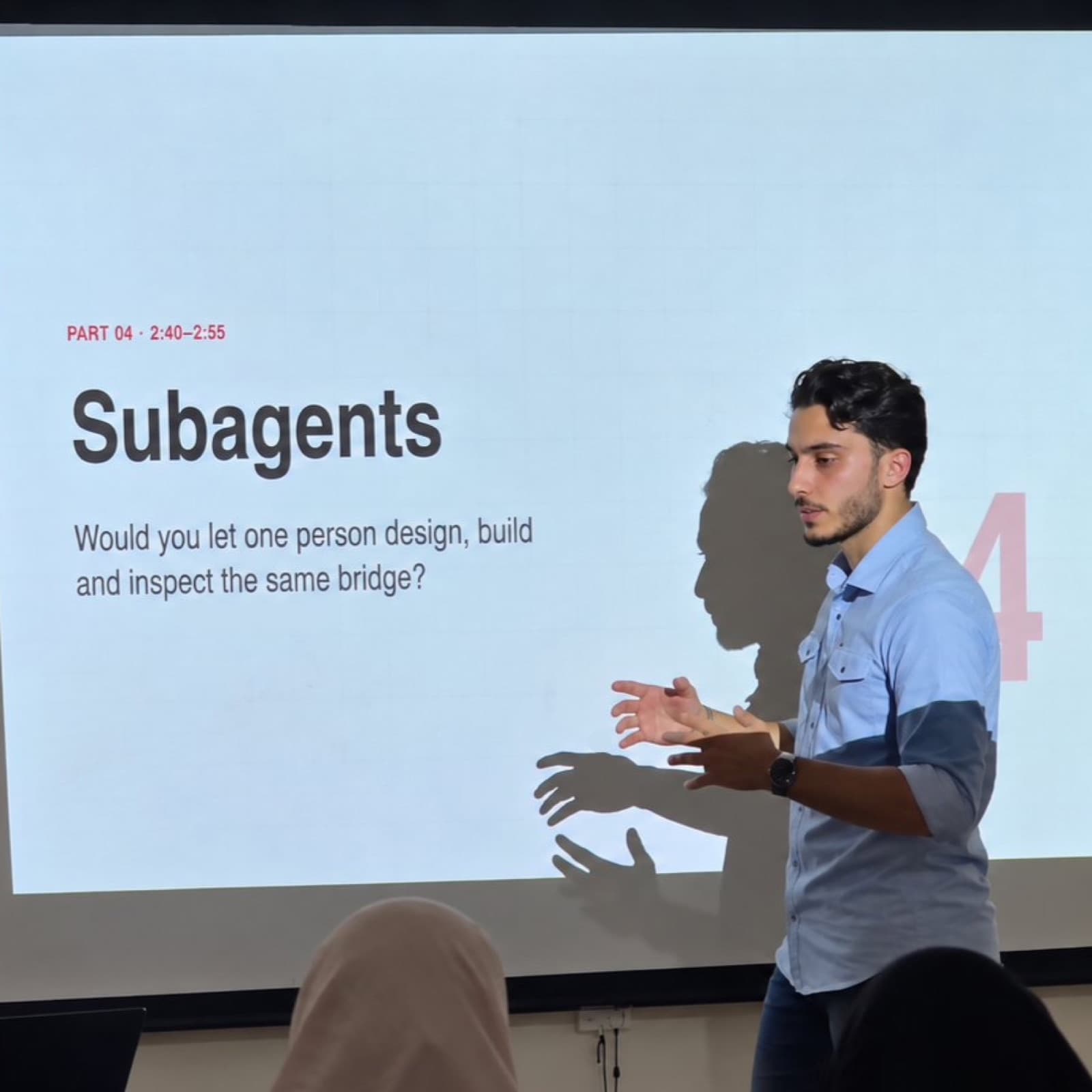
Subagents turn one agent into a team: a lead hands work to research, analysis, and design specialists, and a checker reviews it before you approve. A workflow wires that team into a process with a trigger, a sequence, parallel steps, a loop, and a gate where you sign off. I ran Project Pulse live with eight agents, from one brief in to a researched spec, parts list, and test plan out, then put it on autopilot so it starts whenever a new brief lands in a folder.
What agents can't sign
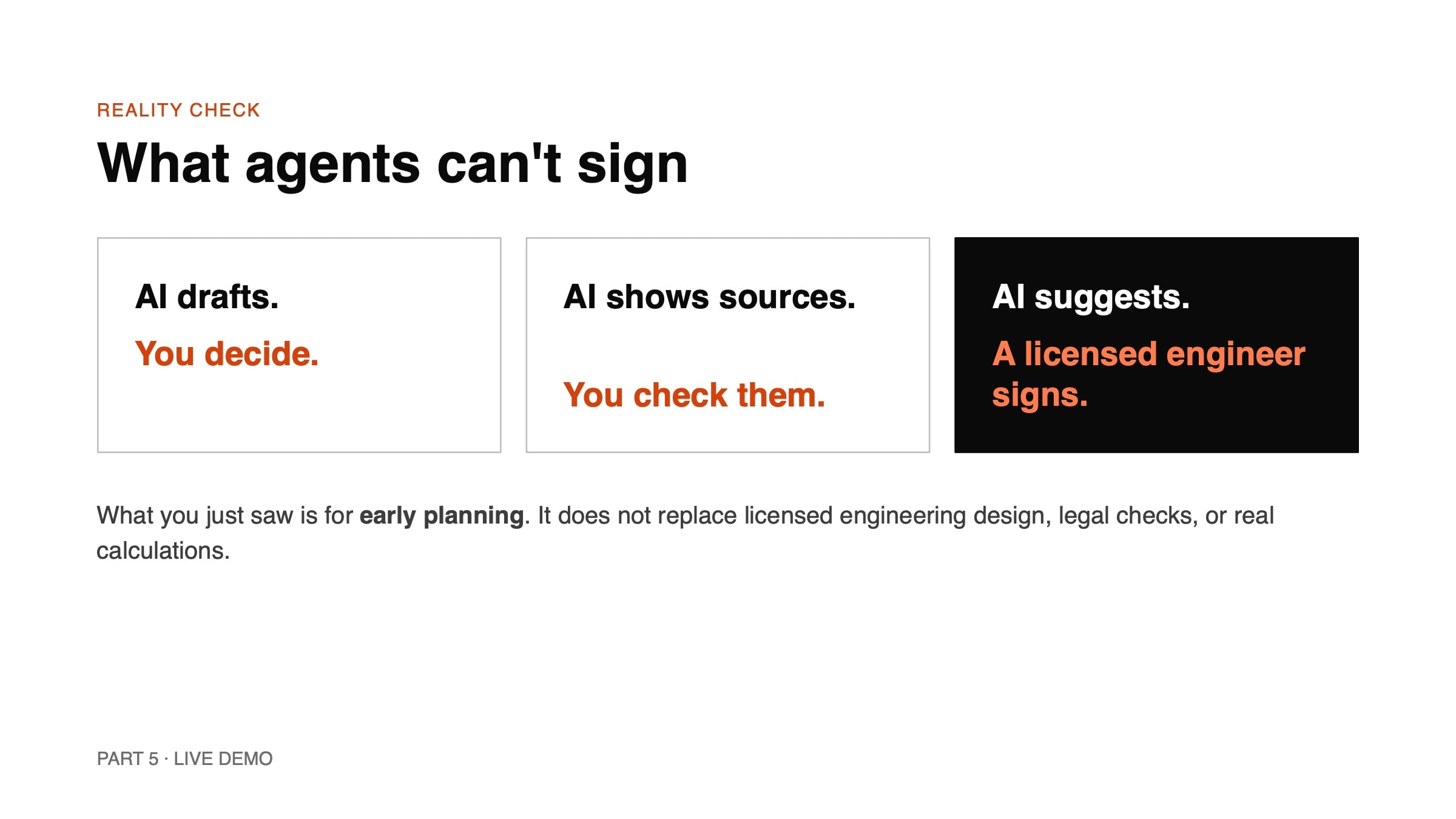
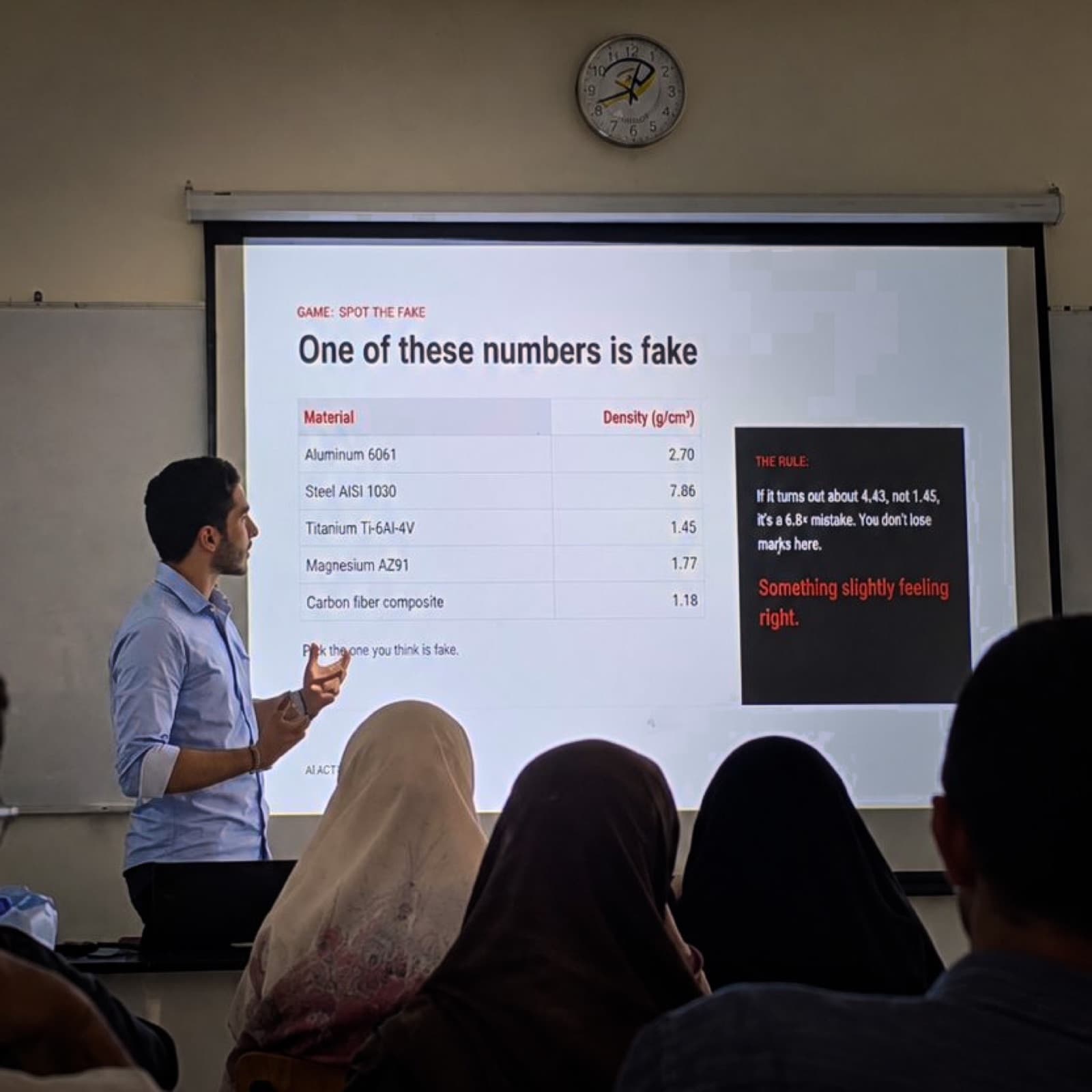
Every line an AI writes sounds equally sure. In a spot-the-fake game, one density in a materials table was wrong, titanium at 1.45 instead of about 4.43, and that set up the checking toolkit: source every number, sanity-check magnitudes, and get a second opinion from a checker agent. AI drafts, you decide; AI suggests, and a licensed engineer signs. I closed with a seven-day challenge and one line to take home: stop asking AI questions, start giving it jobs.